How to Choose a Reliable Star Anise Supplier in Vietnam
22/09/2026
Learn how to choose a reliable star anise supplier in Vietnam. Check origin, quality, processing, certifications, packaging, documentation, and export capability.
How to Choose a Reliable Star Anise Supplier in Vietnam
Vietnam is one of the important origins of star anise, particularly in the northern mountainous region. Lang Son has long been associated with star anise cultivation and production, making Vietnam an attractive sourcing destination for international spice buyers.
However, choosing the right star anise supplier in Vietnam requires more than comparing prices. International buyers need to evaluate the product's origin, quality, processing conditions, food safety controls, documentation, packaging, and the supplier's ability to handle export orders consistently.
This guide explains the key factors buyers should check before selecting a Vietnamese star anise supplier.

Whole dried Vietnamese star anise prepared for international B2B buyers, highlighting the quality and export potential of star anise sourced from Vietnam.
Why Source Star Anise from Vietnam?
Vietnam has a long history of cultivating Illicium verum, the botanical species commonly known as true star anise. The crop is particularly associated with Lang Son and other mountainous areas in northern Vietnam. FAO sources have documented the importance of star anise cultivation in Lang Son and its role in Vietnam's non-wood forest product sector.
Vietnamese star anise is used in a wide range of applications, including:
- Spice and seasoning products
- Meat and poultry seasoning
- Sauces and marinades
- Tea and beverage products
- Food processing
- Essential oil production
- Traditional food and herbal applications
For international buyers, sourcing directly from Vietnam can provide access to the origin, local raw material networks, and Vietnamese spice processing and export companies.
But not every supplier offers the same level of quality or export service.

Star anise growing and drying in Lang Son, Vietnam, one of the country's important star anise-producing regions.
7 Factors to Consider When Choosing a Star Anise Supplier in Vietnam
1. Check the Origin of the Star Anise
The first question to ask is:
Where does the supplier's star anise come from?
A reliable supplier should be able to provide clear information about the origin of its raw materials.
For Vietnamese star anise, Lang Son is one of the most recognized growing areas. Historical FAO documentation identifies Lang Son as a major star anise cultivation area in Vietnam.
Buyers should ask suppliers about:
- Growing region
- Raw material sourcing area
- Harvest season
- Supplier or farmer network
- Traceability system
- Whether the product is sourced directly or through traders
Knowing the origin helps buyers understand the product and establish better traceability throughout the supply chain.

A farmer harvesting star anise in Lang Son, Vietnam, showing the origin of Vietnamese star anise from its growing region.
2. Evaluate Star Anise Quality Specifications
Price should never be the only factor when buying star anise in bulk.
A professional supplier should provide a clear product specification before quotation or shipment.
Important parameters may include:
- Product type: whole star anise or broken star anise
- Size and appearance
- Color
- Aroma
- Moisture
- Foreign matter
- Insect damage
- Broken pieces
- Mold or contamination
- Microbiological requirements
- Pesticide residue requirements
- Heavy metal requirements
Buyers should request a product specification sheet and, when necessary, a sample before placing a large order.
A good supplier should also be able to discuss the buyer's target specification instead of simply offering a standard product.

Close-up of whole dried star anise showing natural color, size, shape, and pod condition for quality evaluation.
3. Check Food Safety and Laboratory Testing
Food safety is especially important when importing spices.
International buyers should ask whether the supplier can provide relevant testing documentation for each product or shipment.
Depending on the destination market and buyer requirements, testing may cover:
- Microbiological parameters
- Pesticide residues
- Heavy metals
- Aflatoxins
- Moisture
- Foreign matter
- Other customer-specific parameters
Third-party laboratory testing can provide additional confidence because the results are based on an independent analysis.
Before signing a long-term supply agreement, buyers should clarify:
What tests are performed, how frequently are they performed, and can the supplier provide the relevant reports?
This is particularly important for buyers importing star anise into markets with strict food safety requirements.
4. Examine the Supplier's Processing Facility
A supplier's processing capability can have a major impact on the consistency and safety of the final product.
Ask whether the company has its own processing facility or relies entirely on external suppliers.
A professional spice processing facility may include processes such as:
Raw material receiving → Cleaning → Sorting → Foreign-material removal → Metal detection → Processing → Quality inspection → Packing → Finished-product storage
Buyers should look for suppliers that have appropriate systems for controlling:
- Dust
- Stones and foreign materials
- Metal contamination
- Cross-contamination
- Moisture
- Storage conditions
- Product traceability
For larger B2B orders, factory information, production photos, videos, or a factory audit can help buyers better understand the supplier's capabilities.
5. Verify Certifications
Certifications can help international buyers assess a supplier's quality management and food safety systems.
Depending on the target market and application, buyers may look for certifications such as:
- ISO 22000
- HACCP
- Organic certification
- Halal certification
- Kosher certification
- Other customer- or market-specific certifications
However, buyers should not choose a supplier based solely on the number of certificates.
It is more useful to verify whether the certification is valid, relevant to the facility, and applicable to the product being purchased.
A reliable supplier should be willing to provide certification documents for verification when requested.
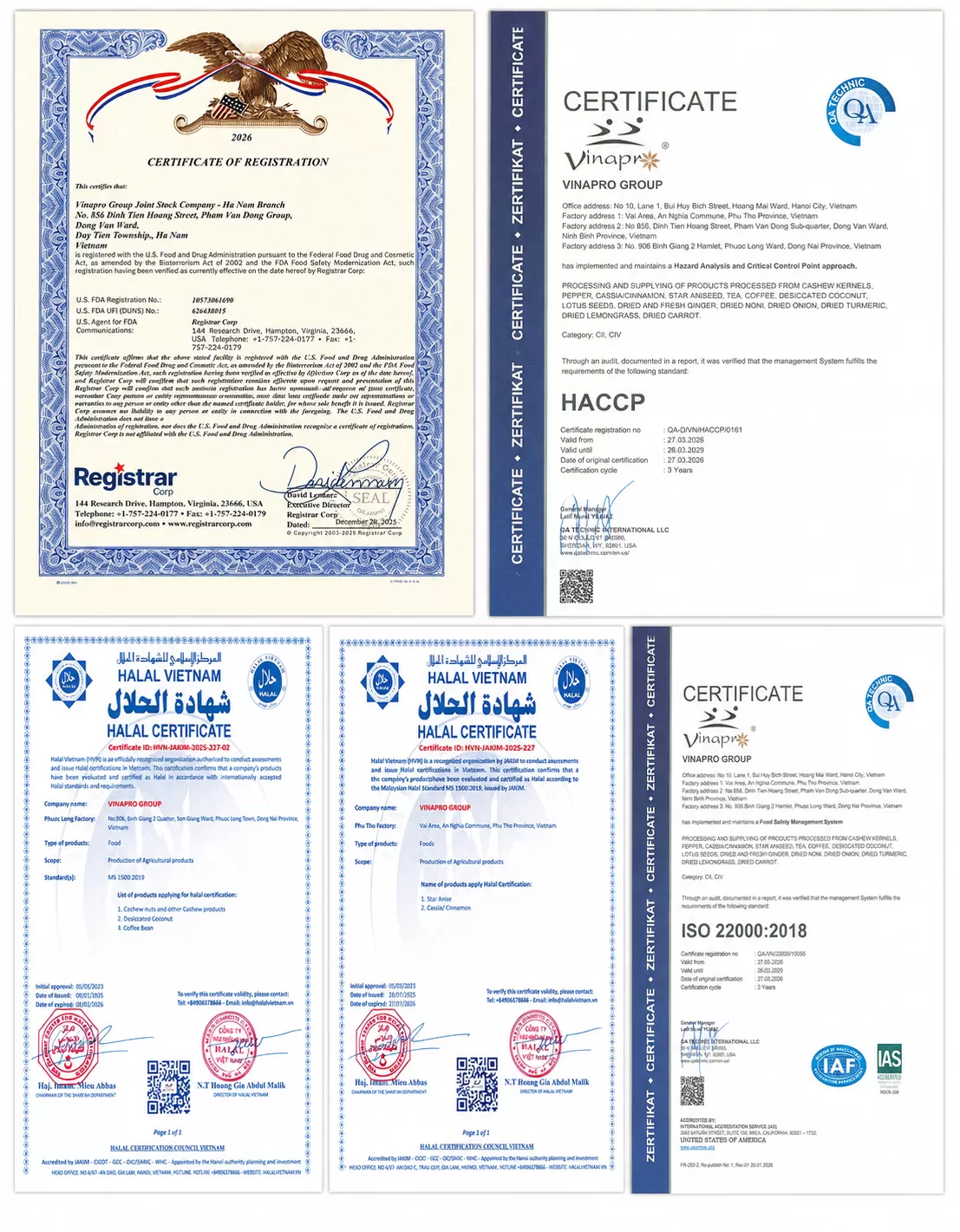
Vinapro certifications supporting food safety, quality management, and international spice export requirements.
6. Compare Packaging and Export Documentation
Star anise can be packed according to the buyer's requirements, but packaging must be suitable for international transportation and storage.
Common bulk packaging options may include:
- PP bags
- PE-lined bags
- Kraft bags
- Cartons
- Customized packaging
The final packaging should be discussed according to the destination market, transportation method, storage period, and buyer's requirements.
International buyers should also confirm whether the supplier can provide the necessary export documentation, such as:
- Commercial Invoice
- Packing List
- Certificate of Origin
- Phytosanitary Certificate, when applicable
- Certificate of Analysis
- Bill of Lading
- Other destination-specific documents
A supplier that understands international documentation can make the purchasing and import process much smoother.
7. Evaluate Export Experience and Communication
A reliable Vietnam star anise exporter should understand international B2B transactions, not simply sell the product.
Before placing an order, buyers can evaluate:
- Response time
- Product knowledge
- Ability to provide samples
- Specification accuracy
- Documentation
- Production lead time
- Minimum order quantity
- Packaging options
- Payment terms
- Shipping arrangements
- After-sales communication
Communication is particularly important for repeat orders.
If a supplier clearly understands specifications, documentation, shipment requirements, and destination-market expectations, it can reduce misunderstandings throughout the purchasing process.
Questions to Ask a Vietnamese Star Anise Supplier
Before requesting a quotation, international buyers can prepare a short checklist:
- Where is your star anise sourced from?
- Is the product whole star anise or broken star anise?
- What are the available quality grades?
- What is the moisture specification?
- Can you provide a product specification sheet?
- Can you provide a sample before bulk ordering?
- What laboratory tests are available?
- Can you provide a Certificate of Analysis?
- What food safety certifications does the facility have?
- What packaging options are available?
- What is the minimum order quantity?
- What is the production lead time?
- Can you handle export documentation?
- Which international markets have you supplied?
- Can you support customized specifications?
A supplier that can answer these questions clearly is easier for buyers to evaluate and compare.
How to Compare Star Anise Suppliers in Vietnam
Instead of comparing suppliers based only on price per kilogram, buyers should consider the total value and supply reliability.
A simple comparison framework can include:
The lowest quotation is not necessarily the lowest-cost option if inconsistent quality, documentation problems, or shipment delays create additional costs.

Bulk Vietnamese star anise prepared for quality evaluation, packaging, and international export comparison.
Vinapro Group as a Vietnamese Spice Supplier
Vinapro Group is a Vietnam-based agricultural and spice exporter supplying products for international B2B buyers.
For buyers evaluating a Vietnamese star anise supplier, Vinapro focuses on factors that are important for international sourcing, including product quality, processing, food safety, documentation, and export requirements.
Vinapro's spice processing system includes cleaning and foreign-material control processes such as stone separation, dust filtration, and metal detection. The company also works with food safety and quality management standards for international markets.
For buyers looking for Vietnamese star anise, cassia, cinnamon, pepper, ginger and other agricultural products, working directly with an experienced Vietnamese exporter can simplify communication and sourcing.
Before placing an order, buyers can request product specifications, samples, packaging options, testing documents, and export information based on their destination market.
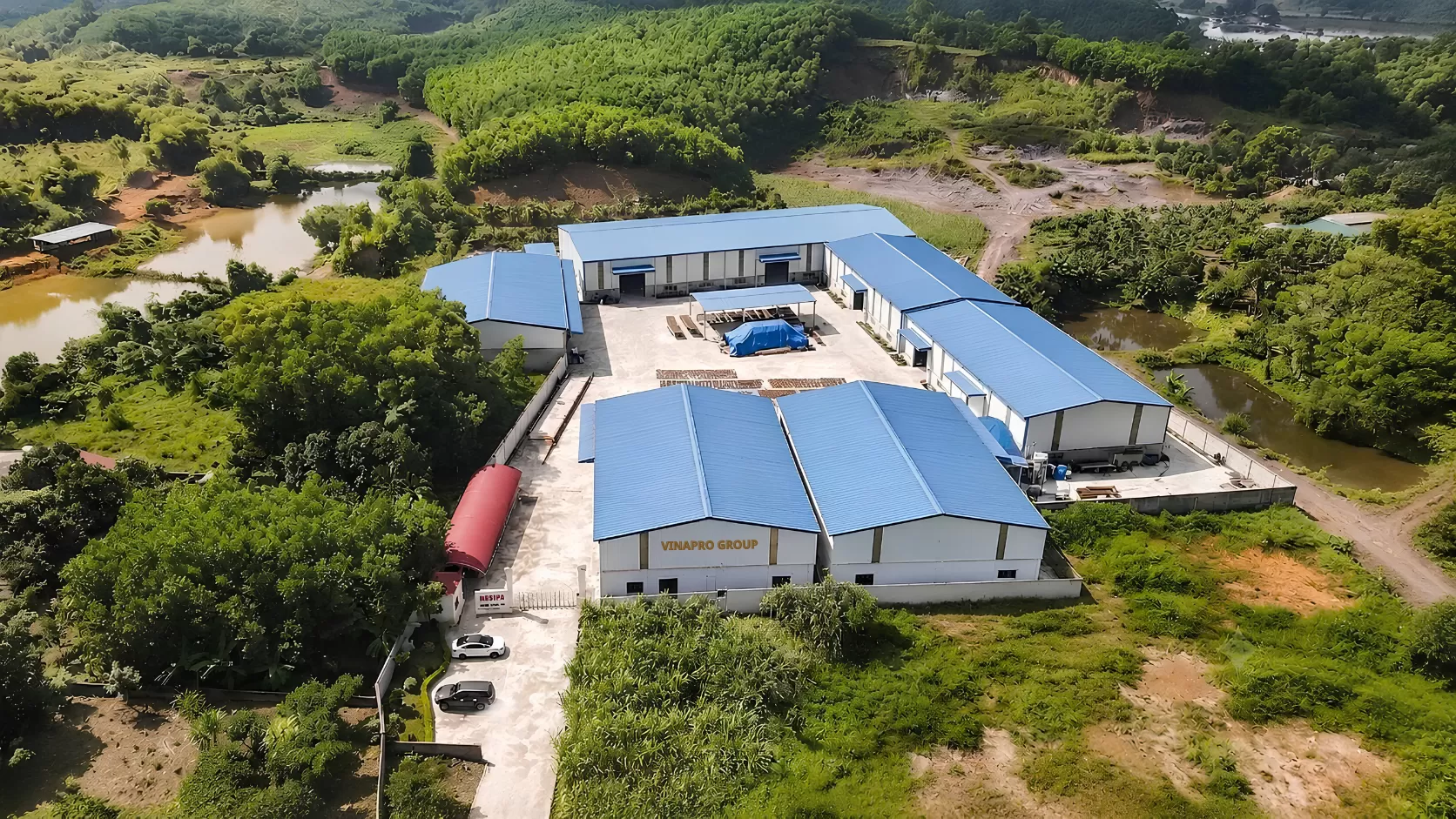
Vinapro's spice processing factory in Vietnam, supporting the processing, quality control, and export of Vietnamese agricultural products and spices.
Final Checklist: Choosing a Reliable Star Anise Supplier in Vietnam
Before selecting a supplier, make sure you can answer yes to the following questions:
- Does the supplier clearly identify the origin of the star anise?
- Can the supplier provide detailed product specifications?
- Can they provide samples?
- Are quality and food safety tests available?
- Can certifications be verified?
- Does the supplier have appropriate processing and cleaning systems?
- Can they provide export documentation?
- Can they meet your required quantity and delivery schedule?
- Can they customize packaging or specifications?
- Do they communicate clearly and professionally?
If the answer is yes across these areas, the supplier is easier to evaluate as a potential long-term B2B partner.
Conclusion
Choosing a reliable star anise supplier in Vietnam should be based on more than price. International buyers should evaluate the complete supply chain, from raw material origin and product quality to processing, food safety, certifications, packaging, documentation, and export capability.
Vietnam's long-established star anise cultivation, particularly in northern growing regions such as Lang Son, provides international buyers with an established sourcing origin.
For buyers planning to import Vietnamese star anise, requesting a specification sheet, sample, laboratory documentation, certification information, and export details is a practical first step toward finding a suitable supplier.
Looking for a Vietnamese star anise supplier for your next import order? Contact Vinapro Group to discuss product specifications, samples, packaging, and export requirements.
- WhatsApp: +84 943 873 296
- Email: info@vinapro.com.vn
- Website: https://vinapro.com.vn/
- Facebook: https://www.facebook.com/vinapro.vn/
- Linkedin: https://www.linkedin.com/company/vinaprogroup/